
Overview
There’s a certain expectation that global shipping infrastructure operates on precision — high coordination, digital intelligence, and clean data pipelines. That expectation quickly unravels when you look closely at how shipping terminal data has been managed in parts of South Africa.
At the core of the problem was a mountain of manually compiled PDF reports, issued daily across several major ports. These included updates on vessel movements, import storage, berthing timelines, and container stack dates — all split by operation type and by terminal, in formats that varied not only between locations, but often from one day to the next.
For stakeholders in the supply chain — whether operational staff, logistics companies, or analysts — the cost was compounded inefficiency. Hours lost manually tracking updates. Delays in container visibility. Decisions made in the dark, based on partial information.
The Solution
Work Lekker built an internal data pipeline capable of digesting terminal-issued PDFs from multiple ports and transforming them into usable, normalized datasets. This involved advanced data extraction techniques, multi-stage validation rules, and the ability to align and consolidate data by terminal, province, vessel, and time — regardless of input structure.
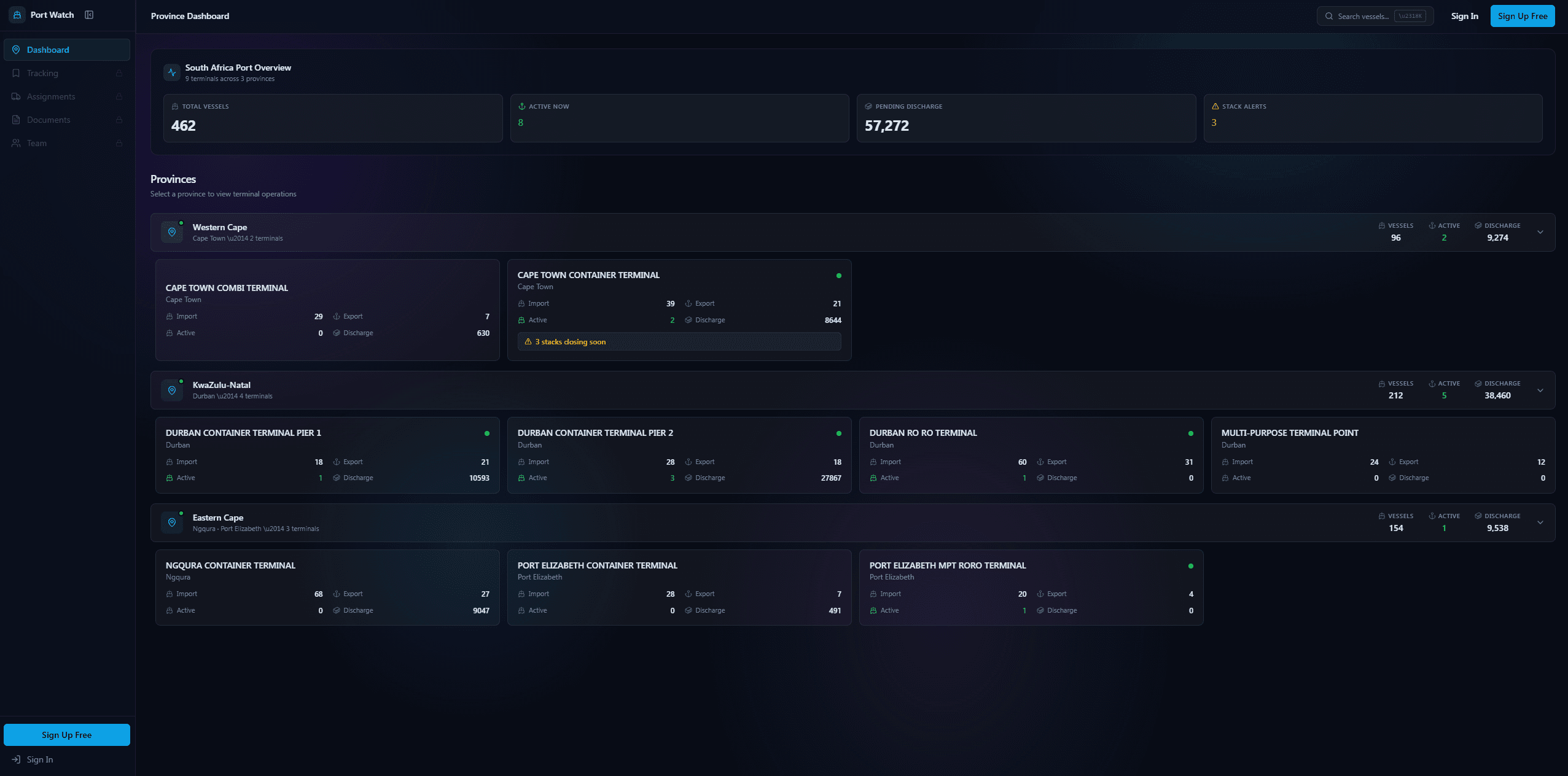
From there, the system evolved into a unified dashboard — a digital control room providing visibility into key terminal operations. Users can now view consolidated container movements, upload their own vessel lists to track progress, and monitor berthing schedules from a single interface.
Impact
What previously required manual cross-referencing of documents can now be achieved through a few quick filters. The platform has unlocked significant improvements in visibility and time-to-decision across a network of users. As the system matures, the vision extends into deeper integrations, predictive insights, and broader visibility across the Southern African logistics ecosystem.